
Water-Damaged Hardwood Floors: Repair or Replace?
· By Dionatha Soares
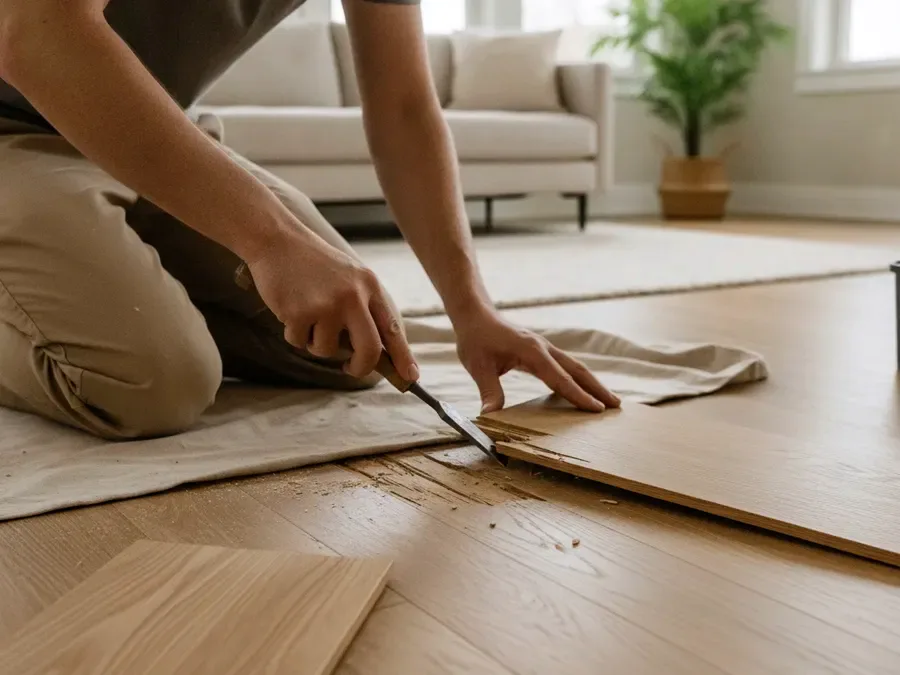
Water is hardwood flooring worst enemy, and in a region with coastal storms, ice dams, burst pipes, and damp basements, water damage is one of the most common problems South Shore homeowners bring to us. The urgent question is always the same: can this floor be saved, or does it have to come out?
The answer depends on how much water, how long it sat, and whether the moisture source is fixed. This guide explains what to do first, what makes a floor repairable, and when replacement is the honest recommendation.
First: stop the water and dry the floor
Before anyone can judge whether the wood is salvageable, the water source has to be stopped and the area thoroughly dried. Refinishing or repairing over a floor that is still wet, or over an unfixed leak, guarantees the problem comes right back.
Get the area dried out with fans and dehumidifiers, and address the source, whether that is a pipe, an appliance, a foundation leak, or an ice dam. Only after the floor and subfloor read dry can anyone assess the real condition of the wood.
Understand cupping, crowning, and buckling
Water damage shows up in the shape of the boards. Cupping is when the edges of boards rise higher than the centers, from moisture underneath. Crowning is the opposite, centers higher than edges. Buckling is severe, where boards actually lift off the subfloor.
Here is the hopeful part: mild cupping often flattens back out on its own once the floor fully dries, sometimes over weeks. A floor that flattens can frequently be sanded and refinished. Buckling and severe, permanent deformation usually mean those boards are done.
When repair and refinishing can save it
Many water-damaged floors are repairable. If the damage is confined to a limited area, individual damaged boards can be removed and replaced with matching wood, then the whole floor sanded and refinished so the repair blends in. Solid hardwood is especially forgiving this way.
Light staining and surface discoloration often sand out. Mild cupping that has flattened after drying usually refinishes cleanly. In these cases, repair plus refinishing costs far less than replacing the entire floor and keeps the original wood.
When replacement is the honest answer
Some water damage is beyond saving. Deep black stains that penetrate the wood often cannot be sanded out. Boards that have buckled, rotted, or grown mold, and subfloors that have been compromised by prolonged soaking, point to replacement. Widespread damage across most of a room is usually more cost-effective to replace than to repair board by board.
Mold is a health issue as well as a flooring one. If water sat long enough for mold to grow into the wood or subfloor, removal and replacement is usually the right, safe call rather than trying to refinish over it.
The role of an insurance claim
Sudden water damage from a burst pipe or storm is often covered by homeowners insurance, while slow, long-term leaks frequently are not. If you may file a claim, document everything with photos before any cleanup, and keep records of the source and the drying process.
A clear, itemized assessment of what can be repaired versus replaced helps with a claim too. We can provide a detailed estimate that separates repair, board replacement, and refinishing so your paperwork is straightforward.
Get an assessment before you decide
Do not tear out a floor in a panic, and do not assume everything is fine just because it looks dry on top. Both mistakes are costly. The right move is a hands-on assessment once the floor has dried, checking moisture, board shape, staining depth, and the subfloor.
Across Plymouth, Marshfield, and the South Shore, we look at water-damaged floors after they dry and give you a straight answer: repair and refinish, or replace. Often more of the floor is saveable than homeowners expect.
Frequently asked questions
- Can cupped hardwood floors be saved?
- Often yes. Mild cupping frequently flattens on its own once the floor fully dries, and a flattened floor can usually be sanded and refinished. Severe or permanent cupping and buckling usually need board replacement.
- How long before I know if the floor is salvageable?
- The floor needs to dry completely first, which can take weeks depending on how much water was involved. Only after it reads dry can anyone judge whether the wood recovered its shape and can be refinished.
- Does water damage always mean replacing the floor?
- No. Many floors can be repaired board by board and refinished, especially solid hardwood with damage confined to one area. Replacement is reserved for deep black staining, rot, mold, or widespread buckling.
- Should I fix the leak before calling about the floor?
- Yes. The water source must be stopped and the area dried before any repair or refinishing, otherwise the damage returns. Once it is dry, book a free assessment and we will tell you what can be saved.
Found this helpful? Make us a preferred source on Google.
Ready for an exact price?
Get a free, no-pressure in-home estimate. Real numbers for your home, not a phone guess.