
Dustless Hardwood Floor Sanding: What It Is and Why It Matters
· By Dionatha Soares
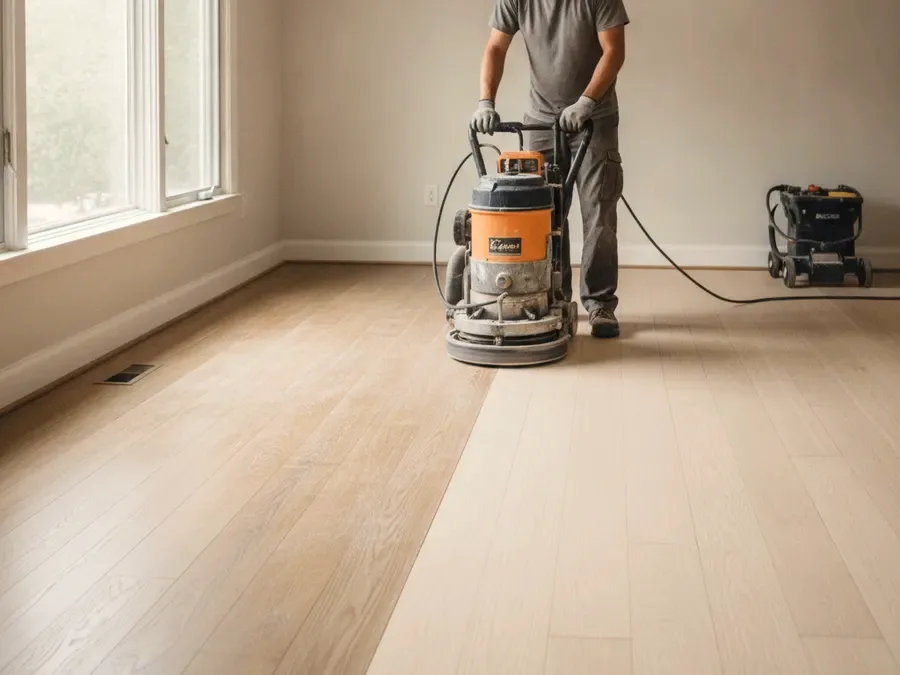
Sanding a hardwood floor removes the old finish and a thin layer of wood, and traditionally that meant clouds of fine dust settling on every surface in the house for weeks. Dustless sanding changes that by pulling the dust away at the source, into a sealed containment system, as the machine works.
It is worth understanding what dustless sanding actually is, because the term is sometimes oversold. Here is a straight explanation of how it works, what it does and does not do, and why it makes a real difference for your home and your final finish.
What dustless sanding actually means
Dustless sanding connects the sanders directly to a powerful vacuum system, often a large unit stationed outside or in a garage, through sealed hoses. As the abrasive cuts the wood, the vast majority of the dust is captured immediately instead of drifting into the air.
To be honest about the word: no sanding is one hundred percent dust-free. A tiny amount of fine dust always escapes. But a proper dustless system captures the overwhelming majority, which is a completely different experience from old-style open sanding.
Why it matters for your health and home
Fine wood dust is an irritant, and it gets everywhere: into HVAC systems, on top of cabinets, behind furniture, and into fabrics. Reducing airborne dust makes the job much easier on anyone in the home with allergies, asthma, or general sensitivity to particulates.
It also saves you an enormous cleanup. Traditional sanding can leave a film of dust you keep finding for weeks. With dust captured at the source, you spend far less time wiping down the whole house after the crew leaves.
Why it matters for the finish
A cleaner work area is not just about comfort, it improves the result. Airborne dust that settles back onto a freshly coated floor can create a gritty texture and imperfections in the finish. Less dust in the air means a smoother, cleaner final coat.
That is one reason a careful crew invests in dust containment: it protects the very surface they just spent hours preparing. The cleaner the air, the crisper the finish looks and feels underfoot.
What to expect during the job
With dustless sanding, you will still hear the machines and there will be some setup with hoses running to the containment unit. Rooms are still best cleared of furniture, and the crew still protects doorways and vents. What you will not get is the whole-house dust storm.
You should still expect a small amount of cleanup and a light haze in the immediate work area, since nothing is perfectly dust-free. Anyone promising literally zero dust is overselling it. The honest promise is dramatically less dust, captured as it is created.
Is it worth it?
For most homes, yes. The reduced cleanup, the better air quality during the job, and the cleaner finish add up to a much better experience, especially in occupied homes where families need to keep living around the project.
If you have young kids, pets, allergies, or simply do not want to scrub dust off every surface afterward, dustless sanding is well worth asking about. When we quote a refinishing job around Plymouth and the South Shore, we are happy to walk you through exactly how the dust is handled.
Frequently asked questions
- Is dustless sanding truly dust-free?
- No. A proper dustless system captures the large majority of dust at the source, but a small amount always escapes. The honest claim is dramatically less dust, not literally zero.
- Does dustless sanding cost more?
- It can add a little to the job because of the specialized equipment, but many homeowners find the reduced cleanup, better air quality, and cleaner finish well worth it. Ask for it to be itemized in your estimate.
- Do I still need to move furniture?
- Yes. Dustless refers to the dust capture, not the prep. Rooms still need to be cleared so the crew can sand the full floor and protect your belongings.
- Does dustless sanding improve the finish?
- It helps. Less airborne dust means fewer particles settling into a freshly coated floor, which gives a smoother, cleaner final surface.
Related services
Serving
Found this helpful? Make us a preferred source on Google.
Ready for an exact price?
Get a free, no-pressure in-home estimate. Real numbers for your home, not a phone guess.