
7 Signs Your Hardwood Floors Need Refinishing
· By Dionatha Soares
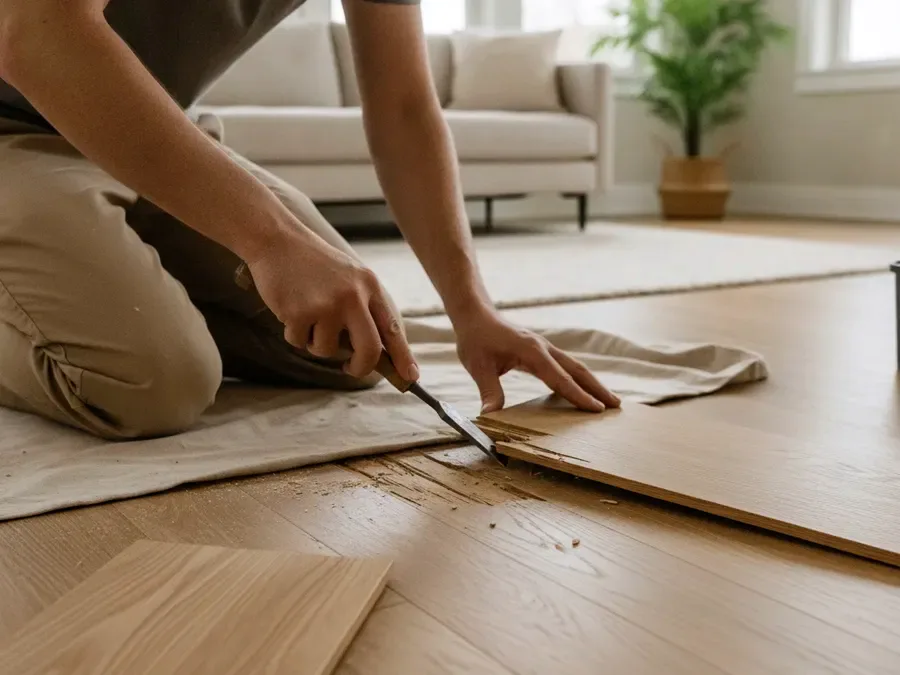
Hardwood floors do not fail all at once. They wear gradually, so it is easy to stop noticing the scratches, the dull patches, and the gray spots until the damage is well underway. Catching the signs early matters, because the difference between refinishing on time and waiting too long can be the difference between a simple recoat and replacing boards.
Here are seven clear signs that your hardwood floors are ready for refinishing. If you spot two or more, it is worth having someone take a look before the wear reaches the bare wood.
1. The finish looks dull and worn in traffic paths
The clearest early sign is a change in sheen along the paths people walk most: hallways, the route from the kitchen to the table, the bottom of the stairs. The finish there loses its luster and looks flat compared to protected areas under furniture.
This dullness is the protective coat wearing thin. Refinishing, or sometimes just a screen-and-recoat, restores the even sheen before the wood underneath is exposed.
2. Scratches that reach the bare wood
Light surface scratches in the finish are normal and easy to address. The warning sign is scratches deep enough to show the raw, lighter wood underneath. Once the finish is broken through, the wood has no protection at those spots.
Run your hand across the area. If you can feel the scratch catch and see pale wood in the groove, the floor is past due for a fresh finish.
3. Water spots, stains, or dark rings
Dark spots, white rings, or cloudy patches usually mean moisture has gotten past the finish. Left alone, those spots can spread and eventually stain the wood itself, which is much harder to fix.
Catching this early often means a straightforward sand-and-refinish. Waiting can turn it into board repair or replacement.
4. Gray or weathered-looking boards
Gray boards are a serious sign. When wood turns gray, the finish has failed completely and the bare wood has started to oxidize and absorb moisture. This is the last stage before black stains set in, which often cannot be sanded out.
If you see graying, do not wait. This is the point where prompt refinishing can still save the floor and delay can force replacement.
5. The water-drop test fails
Try a simple test: place a few drops of water on a worn area. If the water beads up, the finish is still protecting the wood. If it soaks in and darkens the board, the finish has worn through and the wood is now absorbing moisture.
A floor that fails this test is exposed and should be refinished before water damage sets in.
6. Fading and uneven color from sun
Rooms with big windows, common in South Shore homes with water views, often show sun fading over the years. You may notice a lighter path where the sun hits and a darker outline where a rug once sat.
Refinishing evens out the color and lets you reset the whole floor to a consistent tone, sometimes with a fresh stain to update the look.
7. Splinters, cupping, or lifting boards
Boards that splinter, cup at the edges, or lift slightly signal both finish failure and possible moisture movement. These need attention promptly, and a professional look, since the fix may involve repair alongside refinishing.
If you are seeing this on top of the other signs, it is time to get an assessment rather than another season of wear.
Frequently asked questions
- How often do hardwood floors need refinishing?
- It varies with traffic and finish, but many floors go several years to a decade or more between full refinishing. The signs matter more than a fixed schedule: worn sheen, deep scratches, and water absorption tell you it is time.
- Can I just recoat instead of a full refinish?
- If the finish is worn but the wood is not yet exposed or damaged, a screen-and-recoat can renew the surface without a full sanding. Once bare wood or stains appear, a full refinish is usually needed.
- What happens if I wait too long?
- Once the finish wears through, the wood absorbs moisture, grays, and can stain permanently. At that point refinishing may no longer save it and board replacement becomes necessary.
- How do I know for sure my floor is ready?
- Book a free in-home estimate. We check the finish, test water absorption, and look for early damage, then tell you whether a recoat, a full refinish, or repair is the right next step.
Related services
Serving
Found this helpful? Make us a preferred source on Google.
Ready for an exact price?
Get a free, no-pressure in-home estimate. Real numbers for your home, not a phone guess.